The Annapurna Circuit Trek: A Complete Guide to Manang, Thorong La and Beyond

The Annapurna Circuit is one of the great treks of the world, and Manang is its beating heart. You loop around the entire Annapurna massif, climb over a 5,416m Himalayan pass, and drop into a desert valley on the far side. Most people take 12 to 20 days to walk it.
That's the short version. Here's everything you need to know before you lace up your boots, from the route and the altitude to when to go and how it stacks up against the Annapurna Base Camp trek.
What is the Annapurna Circuit?
The Annapurna Circuit is a loop trek around the Annapurna mountain range in central Nepal. It's not an out-and-back walk to a single viewpoint. You go all the way around, so no two days look the same.
The full circuit runs roughly 130km to 230km depending on where you start and finish, and takes most trekkers 12 to 20 days on the trail. The high point is the Thorong La Pass at 5,416m, which you cross about two-thirds of the way round.
What makes it special is the sheer variety. You start in warm, green foothills, climb through pine forest and Tibetan-influenced villages like Manang, cross a snowbound pass, then descend into the dry, wind-carved Kali Gandaki valley. Few treks pack this much change into one route.
The route: village by village
Here's how a typical circuit unfolds, west to east and over the top. Note that road building has crept into both ends of the trail in recent years, so many trekkers now start higher up the valley or take a jeep past the first stretch.
- Besisahar, 760m (start): the traditional trailhead, warm and green.
- Chame, 2,670m: district capital of Manang, and your first big views.
- Pisang, 3,200m: the landscape turns dry and Tibetan.
- Manang, 3,540m: the key acclimatisation stop.
- Yak Kharka, 4,100m: high pasture and thinning air.
- Thorong Phedi, 4,450m: the last camp before the pass.
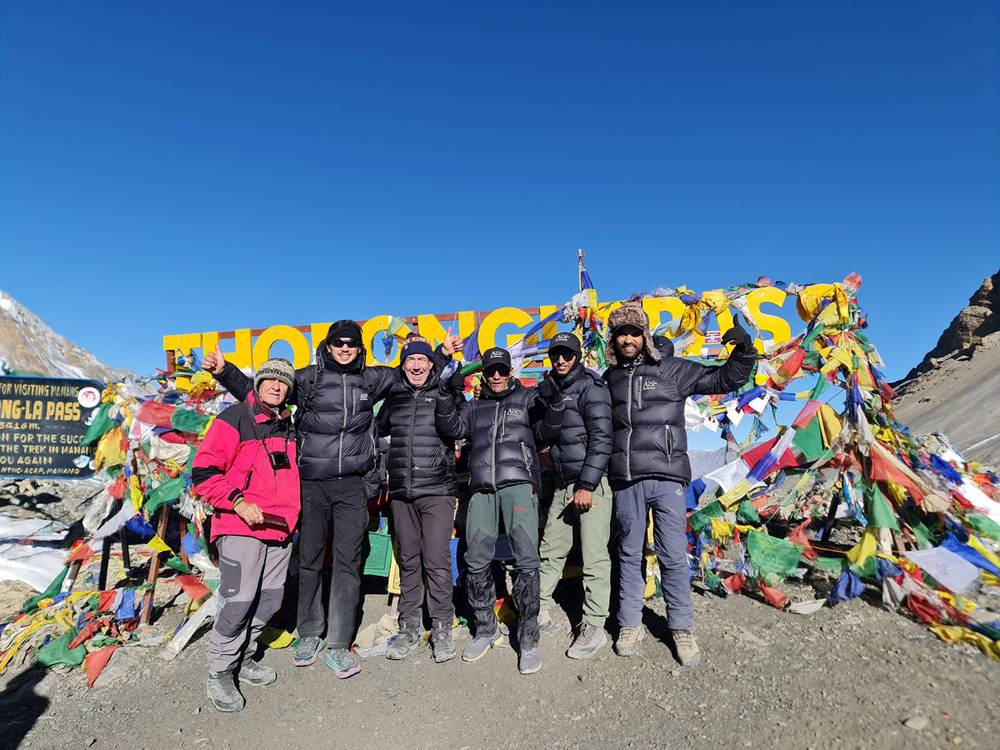
- Thorong La Pass, 5,416m: the high point, all prayer flags and 360-degree views.
- Muktinath, 3,760m: a sacred pilgrimage site on the far side.
- Jomsom, 2,743m: a windy valley town, often a flight or jeep out.
- Tatopani, 2,135m: natural hot springs to soak tired legs.
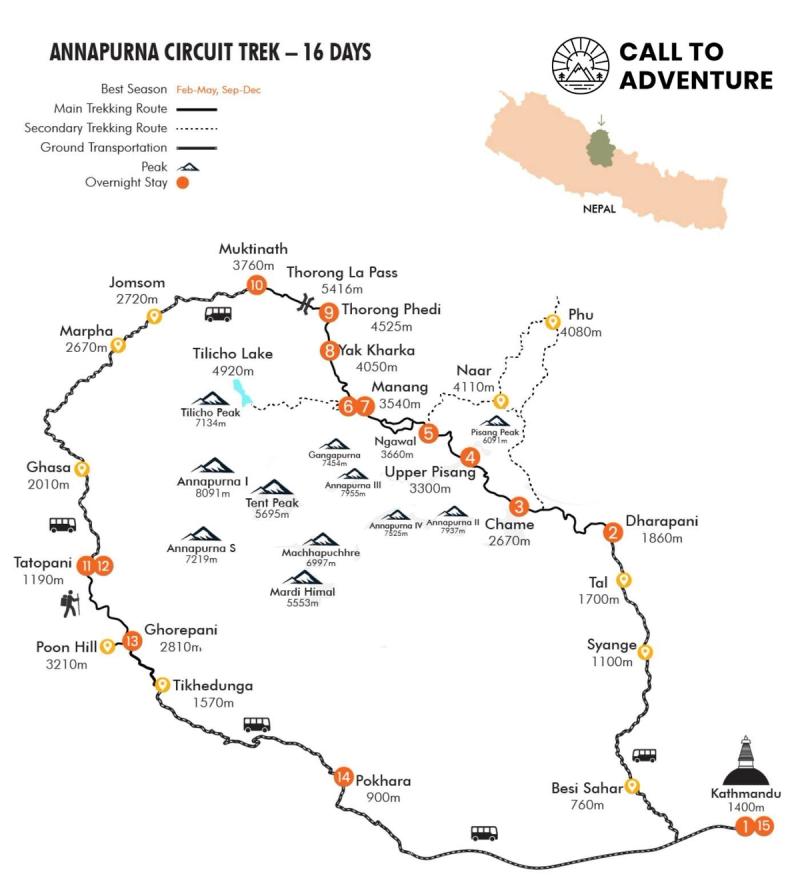
Village altitudes above come from a detailed Annapurna Circuit altitude profile. Many itineraries then finish with a climb to Poon Hill (3,210m) for a sunrise over the Annapurna and Dhaulagiri ranges before heading to Pokhara.
The highlights you'll remember
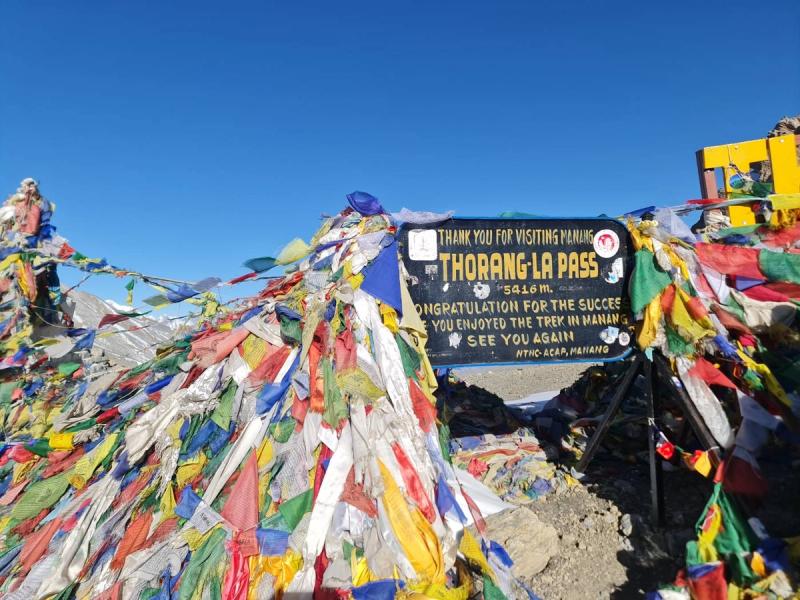
Thorong La Pass (5,416m)
This is the big one. Crossing Thorong La is the physical and emotional peak of the trek. You set off in the dark and cold, climb slowly to the top, and stand among a sea of prayer flags with mountains stretching in every direction.
It's a long, hard day, but it's the one you'll be telling people about for years.
Manang village (3,540m)
Manang is the natural halfway house of the circuit, and the spot where most trekkers take a full acclimatisation day. It sits in a broad valley with the Annapurna peaks looming over the rooftops.
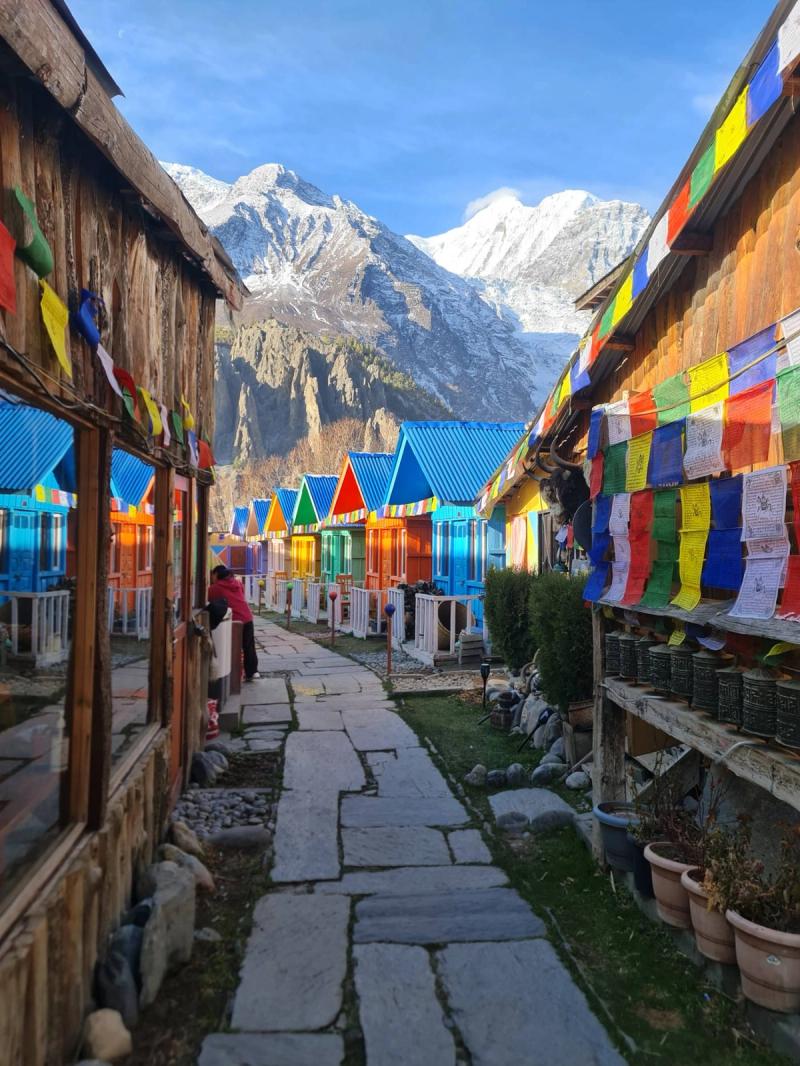
The village has a Tibetan feel, with flat-roofed stone houses, gompas, and a proper mountain-town buzz. Spend your rest day here walking to a viewpoint or the nearby glacial lake, then come back down to sleep.
Muktinath (3,760m)
On the far side of the pass, Muktinath is one of the most sacred sites in Nepal, holy to both Hindus and Buddhists. Pilgrims come for its temple and its 108 water spouts. After the bleakness of the Thorong La Pass, arriving here feels like a reward.
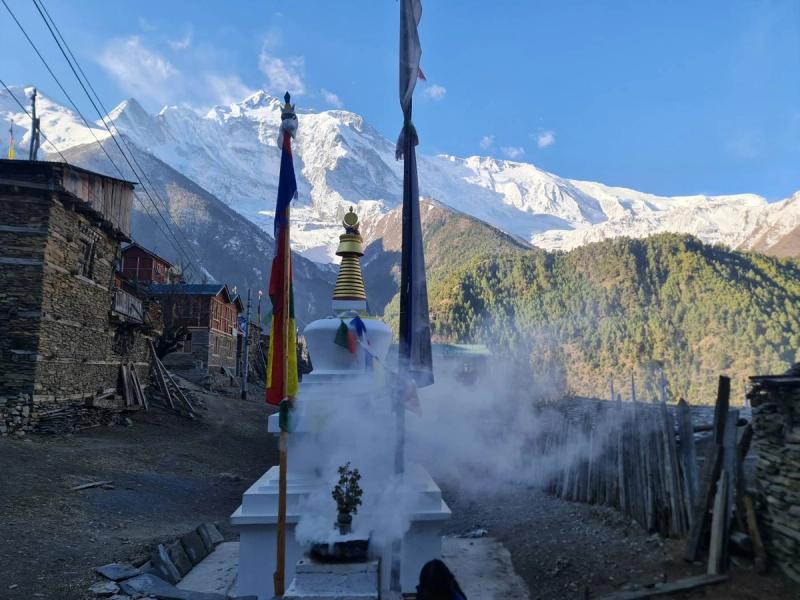
Marpha and the Kali Gandaki
Lower down, Marpha is a whitewashed village famous for its apple orchards and homemade apple brandy. It sits in the Kali Gandaki, said to be one of the deepest gorges on Earth, wedged between two 8,000m giants. The apple crumble is not to be missed.
How hard is the Annapurna Circuit?
Let's be honest: it's challenging. You'll walk five to seven hours a day, day after day, and the highest point is well above 5,000m. This is a proper trek, not a stroll.
The good news is that you don't need to be an athlete. There's no climbing or technical skill involved. If you're a confident hill walker who can manage long days on your feet, you can do this with the right preparation.
Two things make it tough. The first is the sustained distance over two or more weeks. The second, and the bigger one, is the altitude.
Altitude: the real challenge
Fitness gets you along the trail, but altitude is what decides whether you make it over Thorong La. Above 3,000m, the air holds far less oxygen, and your body needs time to adjust.
The safest way to acclimatise is to climb slowly. Health guidance from the US Centers for Disease Control suggests that above around 2,500 to 3,000m, you shouldn't increase your sleeping altitude by more than about 500m a day, and should build in a rest day every three or four days.
This is exactly why a good itinerary builds in an acclimatisation day at Manang. You climb to a higher point during the day, then come back down to sleep, which primes your body for the thin air up at the pass. Rush this part and you're far more likely to be turned back by altitude sickness. Give it the days, and you give yourself the odds.
When is the best time to trek the Annapurna Circuit?
There are two prime windows, and picking the right one makes a real difference.
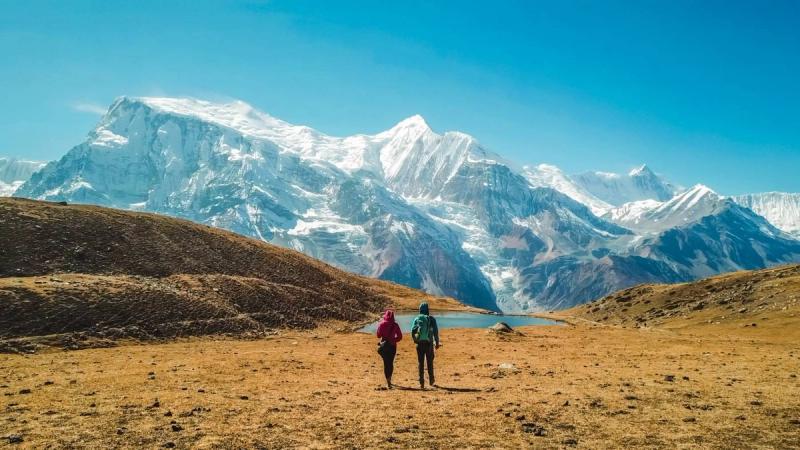
Autumn and spring are the two best seasons, with October generally the single best month. After the monsoon clears, the skies are dry and clear and the mountain views are at their finest.
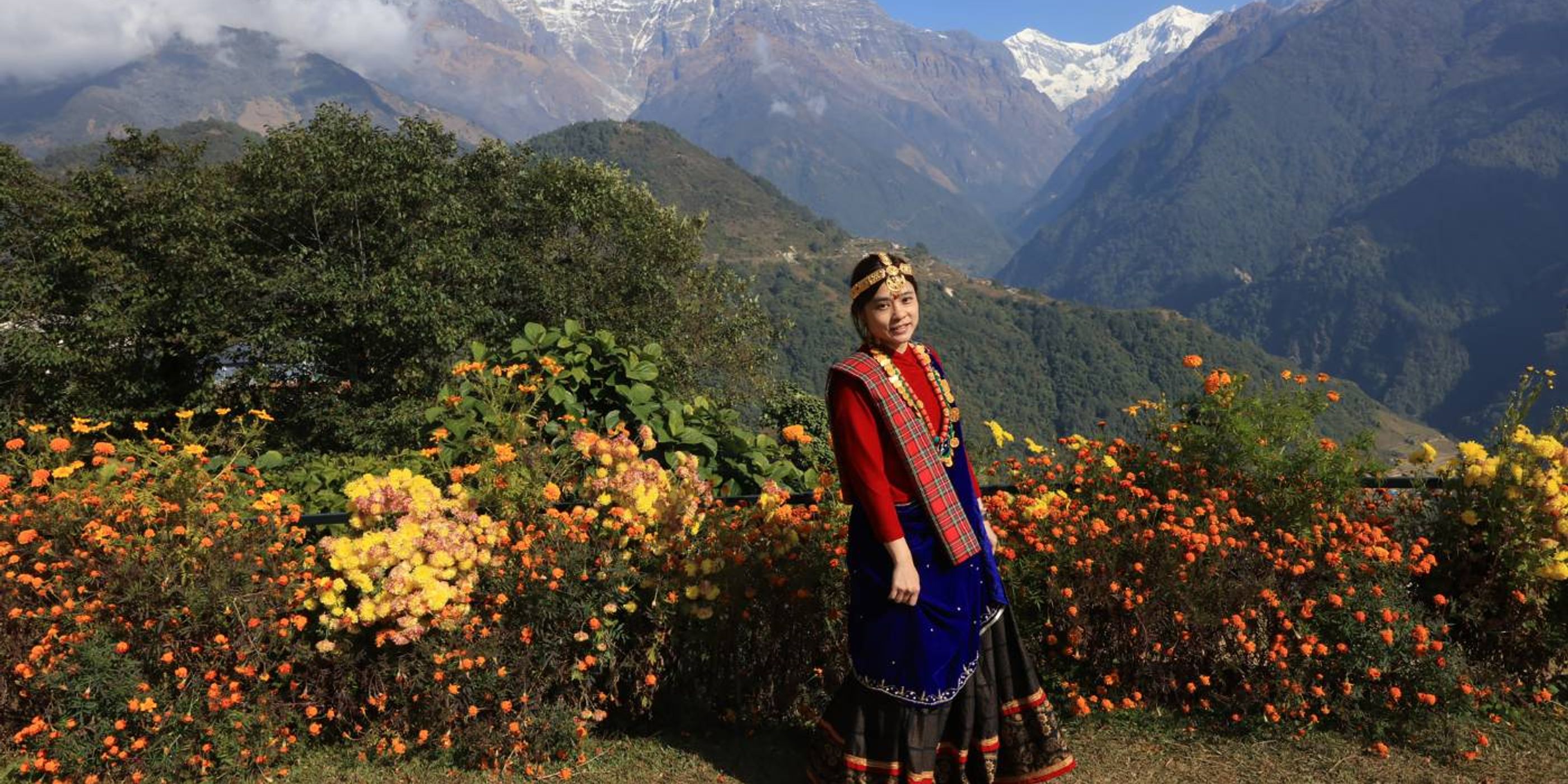
Spring, from around March to April, is the other strong pick. The days are warmer and longer, and the hillsides fill with pink rhododendron blooms.
Two windows to avoid. June to August is monsoon season, which brings rain, cloud, leeches, and landslide risk on the lower slopes. And deep winter, especially January, often sees heavy snow close the Thorong La Pass entirely.
Annapurna Circuit vs Annapurna Base Camp: which is right for you?
People often mix these two up, but they're different treks for different trekkers. Both are brilliant. They just suit different trips.
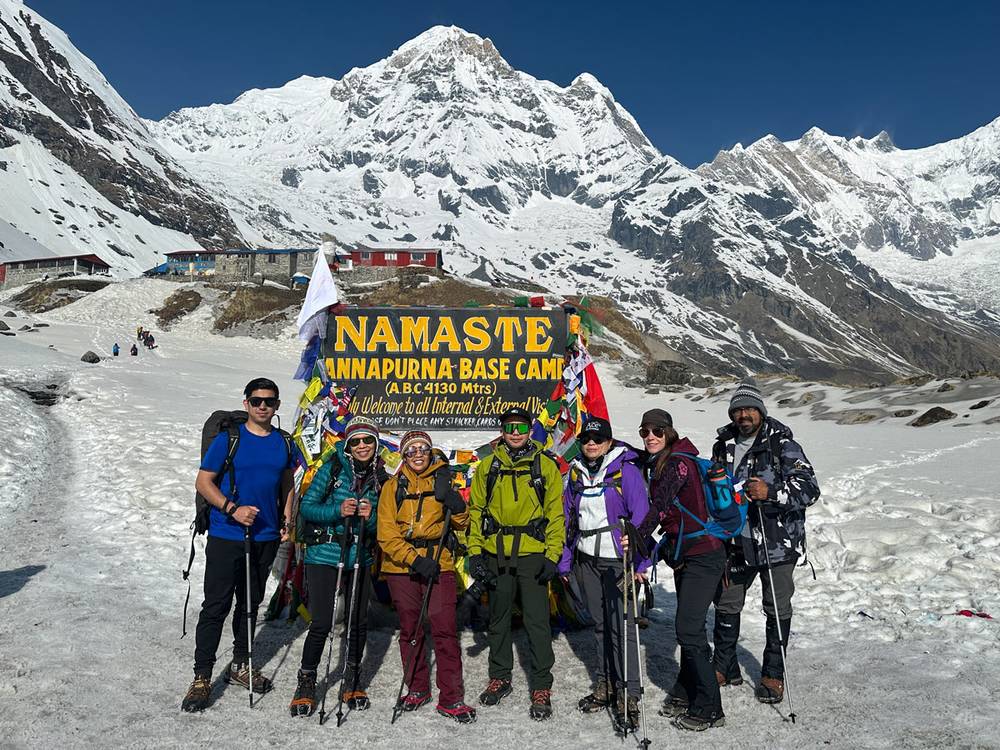
- The shape: the Circuit is a big loop around the whole range, while Base Camp is an out-and-back into a mountain amphitheatre.
- Highest point: the Circuit tops out at the Thorong La Pass, 5,416m; Base Camp reaches 4,130m.
- Length: the Circuit is longer at 12 to 20 days; Base Camp is around two weeks or less.
- The feel: the Circuit gives you huge variety, from green valleys to high desert; Base Camp is a focused walk into the heart of the mountains.
- Best for: the Circuit suits trekkers who want the full high-pass epic; Base Camp suits first-timers or those shorter on time.
In short: choose the Circuit if you want the longer, wilder journey and the challenge of a high Himalayan pass. Choose Base Camp if you've got less time or it's your first Himalayan trek and you'd rather ease in. If you're weighing them up, our 13-day Annapurna Base Camp trek is a gentler introduction to the region.
Trek the Annapurna Circuit with us
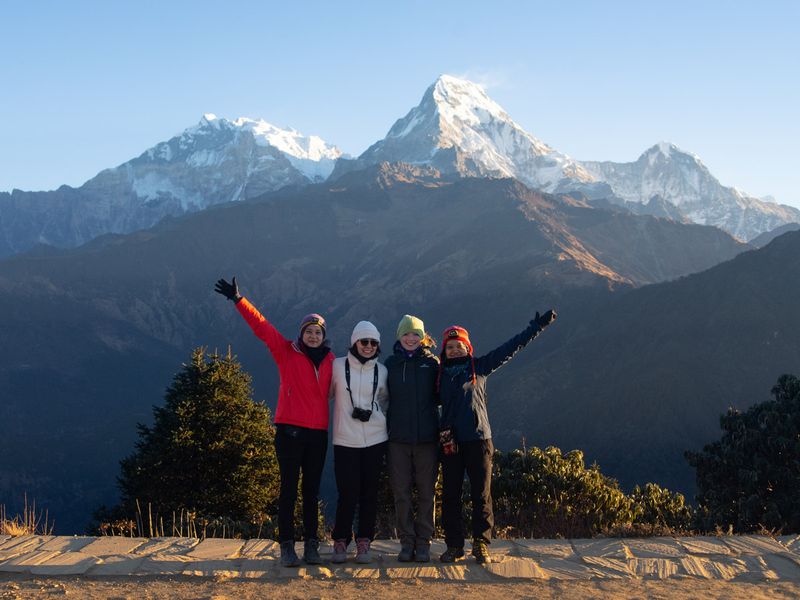
We run the full circuit as a 16-day Annapurna Circuit trek, crossing the 5,416m Thorong La Pass with a proper acclimatisation day built in at Manang. Prices start from GBP 1,319 per person, with a maximum group size of 14.
The route takes in the lot: the climb up through Chame and Pisang, the rest day at Manang, the pass itself, the sacred site at Muktinath, the hot springs at Tatopani, and a sunrise from Poon Hill to finish. Our guides are local, and they walk this trail season after season.
And if you're travelling solo, don't overthink it. Plenty of our trekkers come on their own, and you'll be part of a friendly group within a day or two.
FAQ
How long does the Annapurna Circuit take?
Most people spend 12 to 20 days walking the circuit, depending on the itinerary and how many acclimatisation days are built in. Our version is a 16-day trip. Add your flights from the UK and a day or two either side in Kathmandu or Pokhara, and you're looking at roughly a three-week holiday.
How high is the Annapurna Circuit?
The highest point is the Thorong La Pass at 5,416m, which you cross about two-thirds of the way round. You spend several days above 3,000m before that, which is why acclimatisation matters so much.
Do I need trekking experience?
You don't need technical skills or previous Himalayan experience, but you do need to be a fit, confident hill walker who's happy with long days on your feet. It helps to have done some multi-day walking before you go.
Is the Annapurna Circuit harder than Annapurna Base Camp?
Generally, yes. The Circuit is longer and takes you much higher, over a 5,416m pass, while Base Camp tops out at 4,130m. If you want a shorter or first-time Himalayan trek, Base Camp is the gentler of the two.
What's the best month to trek the Annapurna Circuit?
October is often considered the single best month, with clear skies and dry trails after the monsoon. March and April are the other strong window, with warmer days and rhododendrons in bloom. Avoid the June to August monsoon and deep winter, when the pass can be closed by snow.
Is the Annapurna Circuit safe?
It's a well-trodden trail with plenty of teahouses along the way, and the main risk is altitude rather than terrain. A sensible itinerary with proper acclimatisation days, plus experienced local guides who know the signs of altitude sickness, is the best safeguard.
About the Author

George Beesley
Adventure Lover & Founder of Call To Adventure
George just bloody loves a bit of adventure! Imagine someone who not only hikes up mountains for breakfast but also bikes across continents. Got a case of wanderlust? This guy's been to over 50 countries and comes back with stories that'll make your grandma want to go bungee jumping.